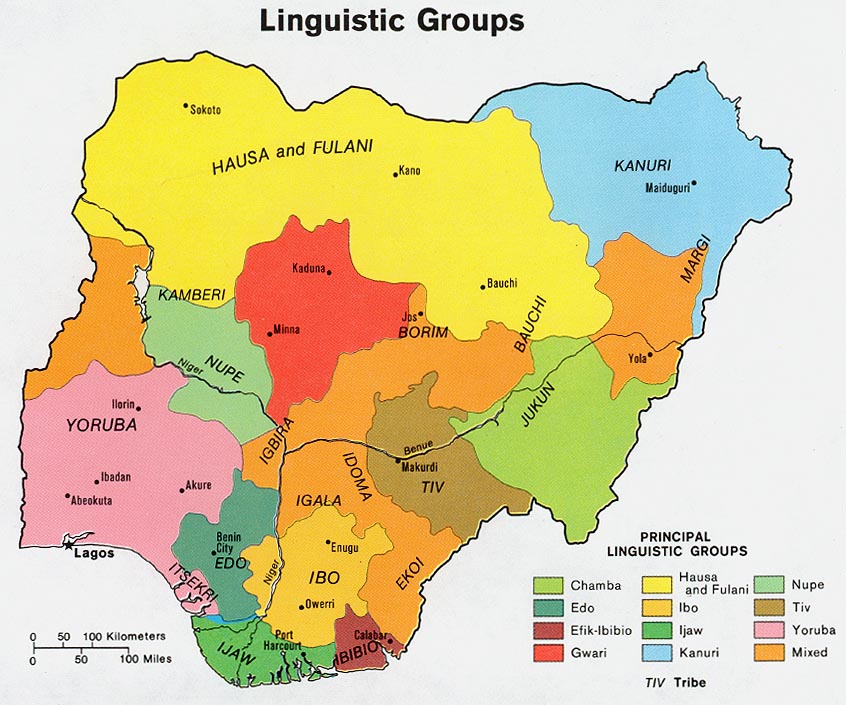
The Kakihum are one of several dialect communities within the Vadi-speaking people, known in the linguistic literature as Tsuvadi. Their language belongs to the Kainji branch of the Benue-Congo family, a vast language group that stretches across central and western Nigeria. The Kakihum are found in Niger State — specifically in the Magama, Kontagora, Mariga, and Rijau Local Government Areas — and in the Ngaski Local Government Area of Kebbi State, placing them in the transition zone between Nigeria's predominantly Muslim north and its more religiously diverse Middle Belt. The Kainji-speaking peoples of this region have long inhabited the savanna and woodland landscapes of northwestern Nigeria, maintaining distinct identities even as larger surrounding groups — particularly the Hausa — have exerted powerful cultural and religious pressure. The Kakihum's identity is inseparable from their language, Tsuvadi, which remains in active use across all generations and age groups, even in the absence of widespread literacy in it.
The Kakihum are predominantly rural subsistence farmers, working the land to cultivate sorghum, millet, maize, yams, and cassava — the foundational crops of the Nigerian savanna belt. Men clear and tend the fields, while women play essential roles in food processing, domestic management, and small-scale trade at local markets. Livestock-keeping, including cattle, goats, and poultry, supplements income and provides protein. The extended family is the bedrock of Kakihum social life. Households are multigenerational, with elders commanding deep respect as custodians of cultural knowledge, arbiters of disputes, and voices of ancestral tradition. Marriage is a community affair involving extended families in negotiations, gift exchanges, and celebrations. Seasonal harvest festivals and life-cycle ceremonies — births, initiations, and marriages — provide occasions for communal feasting, drumming, and dance that reinforce social bonds and cultural identity. Meals center on grain-based staples like tuwo (stiff porridge) and millet couscous, accompanied by soups and stews seasoned with onions, pepper, and locust beans, with goat or bush meat added when available.
The majority of the Kakihum hold to traditional ethnic religions, a worldview in which the visible and invisible realms are deeply interwoven. Spirits, ancestors, and supernatural forces are believed to actively influence daily life, and maintaining harmony with these powers through ritual, sacrifice, and communal observance is a central concern. A significant portion of the Kakihum community practices Islam, reflecting the long reach of Muslim influence across northwestern Nigeria.
A minority within the community identifies with Christianity, and meaningful gospel resources exist in their heart language — including Bible portions translated into Tsuvadi, audio Bible teaching, a literacy primer, and the JESUS Film. These are remarkable provisions that open the door for the word of God to move with power among this people. Yet evangelical faith remains limited in its reach and depth. The Kakihum Christians who have come to know Jesus carry a treasure. May they be stirred to carry that treasure not only to their own neighbors but to the many unreached peoples around them who have yet to hear the gospel in any form.
A complete New Testament in the Tsuvadi language has not yet been translated, and finishing this work is essential for rooting Kakihum believers in Scripture and enabling genuine disciple-making. Literacy rates are low, making oral and audio gospel resources especially critical for the spread of biblical truth in this community. Economic vulnerability is significant in this rural region, where subsistence farming offers little margin against drought, illness, or market failure, and where infrastructure for healthcare and education remains underdeveloped. The church among the Kakihum needs trained local leaders who can disciple new believers, navigate the pressures of both traditional religion and Islam, and raise up a generation of Christ-followers grounded in Scripture rather than syncretism.
Pray that the Holy Spirit will draw Kakihum hearts away from fear-based spirit appeasement and toward the living God who offers freedom, forgiveness, and relationship through Jesus Christ.
Pray for the completion of the full New Testament in Tsuvadi, and that when it is available, God's word will take deep and lasting root in Kakihum families and communities.
Pray that the existing community of Kakihum believers will grow in faith, be discipled well, and become bold witnesses — first to their own people and then to the unreached peoples of their region.
Pray for protection and courage for gospel workers among the Kakihum, especially given Nigeria's ranking as one of the most dangerous countries in the world for Christians.
Scripture Prayers for the Kakihum in Nigeria.
https://www.omniglot.com/writing/vadi.htm
https://www.ethnologue.com/language/tvd
https://www.globalrecordings.net/en/language/tvd
https://www.jesusfilm.org/watch/jesus.html/tsuvadi.html
https://www.opendoors.org/en-US/persecution/countries/nigeria
| Profile Source: Joshua Project |